Key Takeaways at a Glance
- The Label Divide: Ozempic and Mounjaro are FDA-approved for Type 2 Diabetes and widely covered. Wegovy and Zepbound are approved for weight loss, which over 50% of commercial plans explicitly exclude.
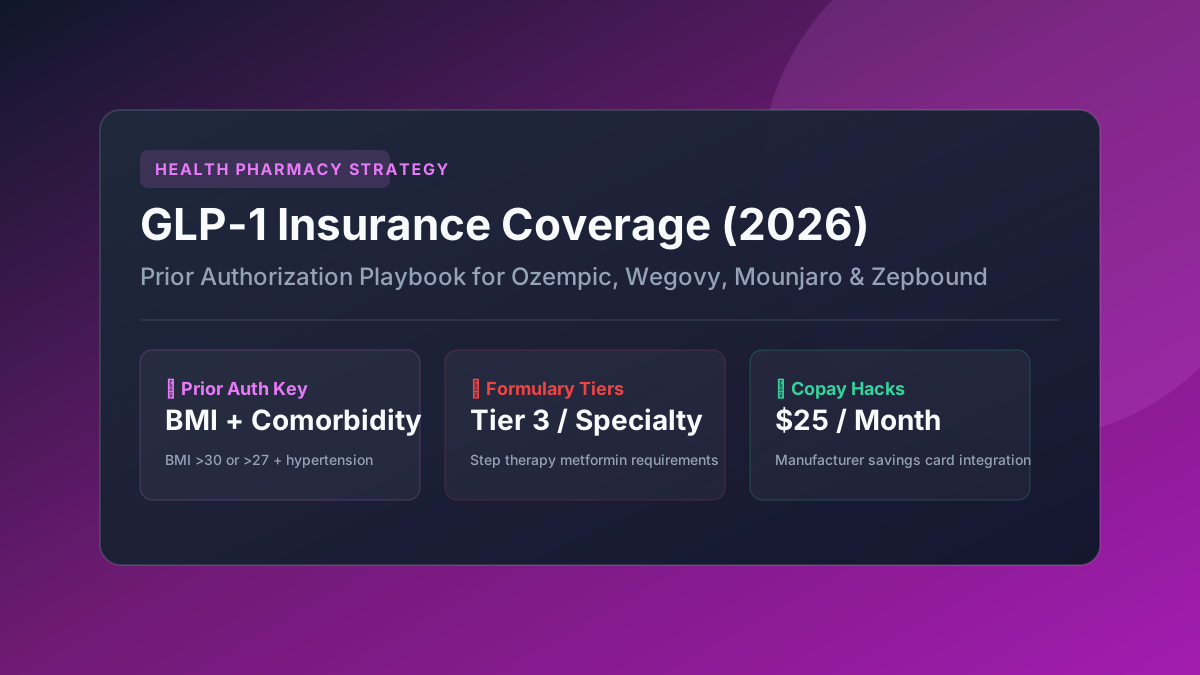
- The Prior Authorization (PA) Gauntlet: Approval requires documented clinical evidence: BMI ≥ 30 (or ≥ 27 with comorbidities), 3–6 months of lifestyle programs, and step therapy failure.
- Cardiovascular Indication Breakthrough: The FDA's expanded approval of Wegovy for reducing major cardiovascular adverse events (MACE) provides new legal leverage to overturn health insurance denials.
- Copay Card Arbitrage: Manufacturer savings cards can reduce out-of-pocket costs to $25/month, but only if your underlying commercial insurance plan covers the drug.
Calculate Your Health Insurance Annual Out-of-Pocket Maximum
Evaluating high-deductible health plans vs. comprehensive PPOs with brand-name prescription drug tiers? Calculate total costs with our Health Insurance Calculator.
- 1. The GLP-1 Coverage War: Diabetes vs. Weight Loss Formularies
- 2. The 2026 Prior Authorization Checklist (What Underwriters Demand)
- 3. Navigating Step Therapy & The "Fail First" Requirement
- 4. How to Win an Appeal: The Cardiovascular & Medical Necessity Strategy
- 5. Manufacturer Savings Cards, Compounding Clinics & HSA Rules
- Frequently Asked Questions
1. The GLP-1 Coverage War: Diabetes vs. Weight Loss Formularies
Glucagon-like peptide-1 (GLP-1) receptor agonists and dual GIP/GLP-1 medications represent a monumental medical breakthrough. However, with list prices exceeding $950 to $1,350 per month, Pharmacy Benefit Managers (PBMs) like CVS Caremark, Express Scripts, and OptumRx have erected aggressive coverage hurdles.
Understanding your insurance status begins with identifying whether your medication is categorized under diabetes care or anti-obesity therapy:
| Brand Name | Active Peptide | FDA Approved Indication | Typical Insurance Status | Retail List Price |
|---|---|---|---|---|
| Ozempic | Semaglutide | Type 2 Diabetes mellitus | Widely Covered (Tier 2/3 with PA) | ~$960 / mo |
| Wegovy | Semaglutide (Higher dose) | Chronic weight management & cardiovascular risk | Plan Dependent (~45% plans exclude) | ~$1,350 / mo |
| Mounjaro | Tirzepatide | Type 2 Diabetes mellitus | Widely Covered (Tier 2/3 with PA) | ~$1,060 / mo |
| Zepbound | Tirzepatide | Chronic weight management | Plan Dependent (Requires obesity rider) | ~$1,050 / mo |
2. The 2026 Prior Authorization Checklist (What Underwriters Demand)
Submitting a prescription without an approved Prior Authorization (PA) guarantees an instant rejection at the pharmacy counter. To satisfy clinical criteria, your doctor’s chart notes must document:
- Body Mass Index (BMI): Documented BMI ≥ 30 kg/m², OR a BMI ≥ 27 kg/m² accompanied by at least one weight-related comorbid condition (hypertension, coronary artery disease, obstructive sleep apnea, dyslipidemia, or pre-diabetes).
- Supervised Lifestyle Intervention: Clinical records demonstrating participation in a structured, comprehensive lifestyle program (dietary restriction, nutritional counseling, exercise regimen) for at least 3 to 6 continuous months within the preceding year.
- Baseline Lab Work: Recent (within 90 days) comprehensive metabolic panel, HbA1c, and fasting lipid panel.
3. Navigating Step Therapy & The "Fail First" Requirement
Many insurance plans enforce Step Therapy (also known as "fail first" protocols). Before approving a $1,000/month GLP-1, the insurer requires the patient to try and fail lower-cost older medications:
- For Type 2 Diabetes: Proof that generic Metformin, sulfonylureas, or SGLT2 inhibitors caused adverse side effects or failed to lower HbA1c below 7.0%.
- For Weight Loss: Documented trials of older oral generic weight loss drugs like Phentermine, Contrave, or Qsymia, or clinical documentation showing contraindications (such as cardiac arrhythmias or uncontrolled hypertension that make stimulants unsafe).
4. How to Win an Appeal: The Cardiovascular & Medical Necessity Strategy
If your initial Prior Authorization is denied, do not give up. Over 50% of first-time GLP-1 denials are overturned on appeal when handled systematically:
- Request the Specific Denial Code: Demand the exact clinical denial letter citing the policy guideline section (e.g., "Lack of documented comorbidity" vs. "Plan exclusion").
- Leverage the SELECT Trial Cardiovascular Indication: The FDA approved Wegovy to reduce the risk of major cardiovascular death, heart attack, and stroke in adults with established cardiovascular disease. If you have past cardiac history (stents, angina, coronary plaque), your appeal should frame the medication as lifesaving cardiology care rather than cosmetic weight management.
- Conduct a Peer-to-Peer Review: Have your prescribing endocrinologist or cardiologist schedule a 15-minute phone conference with the insurer's medical director. Clinician-to-clinician conversations frequently result in immediate verbal approvals.
5. Manufacturer Savings Cards, Compounding Clinics & HSA Rules
If your commercial insurance covers the drug with a high Tier 3 copay ($150–$300/month), you can activate a manufacturer copay card (available on the official Novo Nordisk or Eli Lilly drug websites) to reduce your out-of-pocket cost to as low as $25 for a 30-day or 90-day supply.
Important Warning: Under federal anti-kickback statutes, manufacturer copay cards are legally prohibited for anyone enrolled in Medicare, Medicaid, or Tricare. Furthermore, while cash-pay compounded semaglutide clinics have proliferated, compounded formulations are not FDA-approved, are excluded by all major insurance carriers, and can present stability and dosing risks. You can, however, pay for out-of-pocket prescription costs using pre-tax dollars from a Health Savings Account (HSA) or Flexible Spending Account (FSA).
Frequently Asked Questions
Why does health insurance cover Ozempic but deny Wegovy?
Both drugs contain the identical active ingredient (semaglutide), but Ozempic is FDA-approved specifically for Type 2 Diabetes, which health plans are legally and clinically mandated to cover. Wegovy is approved for chronic weight management (obesity), an elective category that many employer plans explicitly exclude to avoid high monthly drug costs.
What are the common prior authorization requirements for GLP-1s?
Insurers generally require a documented BMI of 30 or higher (or 27+ with a comorbidity like hypertension or high cholesterol), clinical proof of a 3- to 6-month failed trial of supervised diet and exercise, and step therapy failure with lower-cost oral medications like metformin.
How can I appeal a GLP-1 insurance denial?
Work with your prescribing physician to file a formal internal appeal with a comprehensive Letter of Medical Necessity detailing secondary health risks (cardiovascular risk reduction, pre-diabetes), request a peer-to-peer physician conference with the plan's medical director, and escalate to an External Independent Review Organization (IRO) if necessary.