Key Takeaways at a Glance
- Veterinary Cost Inflation: Advanced veterinary medicine (CT scans, MRIs, chemotherapy, orthopedic cruciate ligament surgery) routinely results in $4,000 to $10,000 emergency invoices.
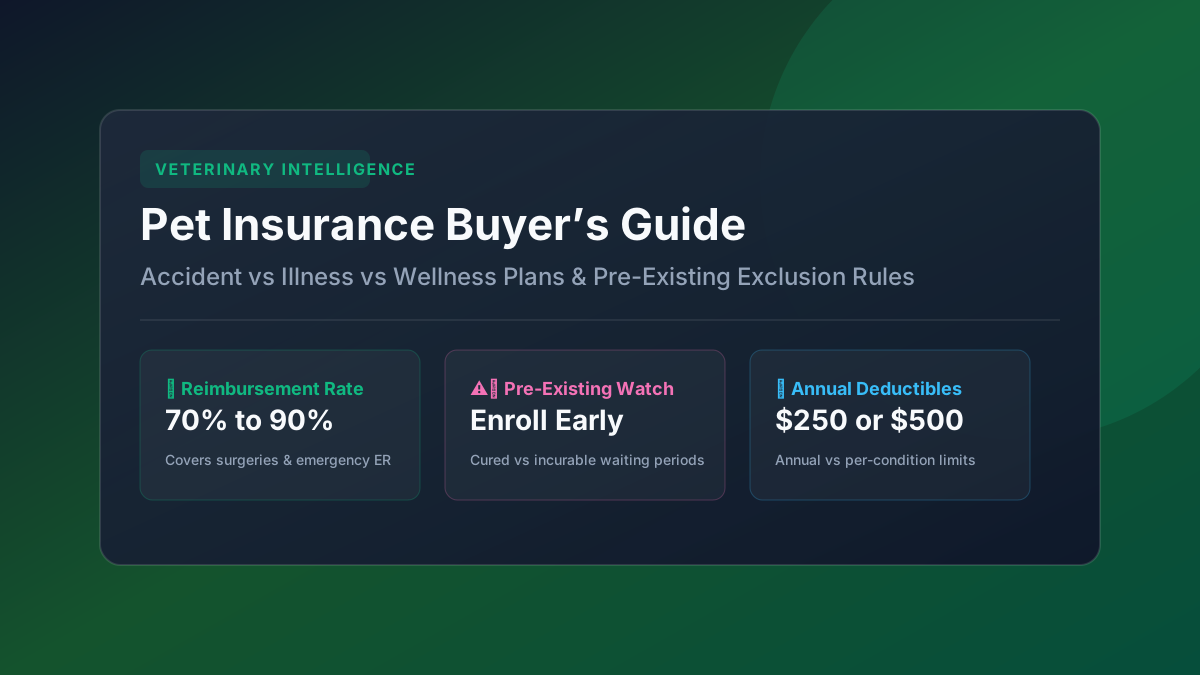
- The Reimbursement Model: Unlike human health insurance, pet insurance operates on a post-treatment reimbursement model (typically 70%, 80%, or 90% of paid vet bills).
- The Pre-Existing Trap: No standard pet insurer covers pre-existing conditions. Enrolling pets while young and symptom-free is the only way to ensure universal coverage.
- Annual vs. Per-Incident Deductibles: Always choose an annual deductible ($250 or $500) rather than a per-incident deductible to maximize multi-visit payouts.
1. The Surge in Veterinary Costs & Economic Euthanasia
Modern veterinary medicine has achieved remarkable clinical milestones. Today, companion animals receive chemotherapy, MRI scans, hip replacements, complex neurological surgeries, and advanced dialysis. However, veterinary medicine has also adopted the cost structure of modern hospital systems.
According to nationwide veterinary claims data, an emergency foreign-body intestinal obstruction surgery (such as a dog swallowing a sock) costs between $3,500 and $7,200. A ruptured cranial cruciate ligament (TPLO surgery) costs $4,500 to $6,000 per leg.
Faced with unexpected multi-thousand-dollar emergency bills, pet parents frequently confront the heartbreaking dilemma of "economic euthanasia." Pet insurance transforms volatile medical disasters into predictable monthly premiums.
2. The 3 Types of Pet Insurance Plans
1. Accident-Only Plans (Budget Choice: $12–$20/mo): Covers physical trauma and sudden emergencies: bone fractures, lacerations, foreign object ingestion, bee stings, toxin poisoning, and vehicular strikes. Does NOT cover illnesses, cancer, or infections.
2. Accident & Illness Plans (The Gold Standard: $35–$65/mo): The recommended choice for 90% of pet owners. Covers all accidents PLUS major chronic illnesses: cancer treatments, diabetes, heart disease, arthritis, hip dysplasia, allergies, and hereditary conditions.
3. Routine Wellness / Preventive Add-ons ($15–$25/mo): An optional rider that contributes flat stipends toward annual rabies vaccines, heartworm testing, flea/tick prevention, and dental cleanings.
3. How Pet Insurance Math Works: Deductible & Reimbursement
Pet insurance does not use in-network doctor tiers. You visit any licensed vet, pay the bill out of pocket, and submit an itemized receipt to the insurance app for reimbursement:
| Invoice Component | Vet Bill Example | Insurance Calculation | Your Net Out-of-Pocket |
|---|---|---|---|
| Emergency TPLO Cruciate Surgery | $5,000.00 | Total covered invoice | — |
| Annual Deductible Applied | -$250.00 | Subtracted first (once per policy year) | $250.00 |
| Remaining Eligible Balance | $4,750.00 | Basis for reimbursement calculation | — |
| 90% Reimbursement Rate Applied | $4,275.00 | Insurance Check Paid to You: $4,275.00 | — |
| Total Summary | $5,000 Total Bill | Insurer pays $4,275.00 (85.5% of total) | $725.00 Net Expense |
4. Navigating Pre-Existing Condition Loopholes
The most critical rule in pet insurance: No carrier covers pre-existing conditions. If your dog suffered from an ear infection or limped on a knee before your policy waiting period ended, that entire anatomical category will be permanently excluded.
However, savvy pet owners look for carriers (like Embrace and ASPCA) that distinguish between Incurable Conditions (like diabetes or hip dysplasia) and Curable Conditions (like urinary tract infections or ear mites). If a curable condition shows zero treatment symptoms for 12 consecutive months, it is reinstated into full coverage!
5. Breed-Specific Predispositions & Crucial Waiting Periods
When shopping for coverage, scrutinize your pet breed’s genetic health risks and your carrier’s statutory waiting periods:
Orthopedic Waiting Periods: Many national pet insurers enforce a 14-day waiting period for illnesses and accidents, but mandate a 6-month waiting period for cruciate ligament injuries and hip dysplasia. If you own a Golden Retriever, German Shepherd, or Labrador, look for carriers that allow your vet to perform an orthopedic waiver exam to shorten this waiting period to 14 days.
Brachycephalic Syndrome: French Bulldogs, Pugs, and Boston Terriers frequently develop elongated soft palates and stenotic nares requiring airway surgery. Ensure your policy does not exclude congenital or hereditary respiratory conditions.
Cancer Coverage: Cancer affects nearly 50% of dogs over age 10. Confirm your policy covers chemotherapy drugs, oncology consultations, radiation therapy, and specialized immunotherapy without restrictive annual payout caps.
Compare Verified Rates in Your State
Benchmark rate filings from Progressive, State Farm, GEICO, Allstate, and Travelers with zero obligation.
Frequently Asked Questions
Q: Does pet insurance pay the veterinarian directly?
Most carriers require you to pay upfront and submit receipts for direct-deposit reimbursement within 5 to 10 days. However, carriers like Trupanion and Pets Best offer direct vet-pay software at participating animal hospitals.
Q: Do pet insurance rates increase as the dog or cat gets older?
Yes. Because older pets have higher statistical frequencies of cancer and chronic organ disease, premiums increase gradually each year as your pet ages.
Q: Are dental cleanings covered by standard pet insurance?
Routine cosmetic cleanings are only covered if you purchase a Wellness add-on. However, traumatic tooth fractures and diseased tooth extractions are covered under standard Accident & Illness plans.
Related Authority Insurance Guides
Gap Insurance Explained: When Is It Worth It?
Learn how gap insurance covers vehicle loan depreciation deficits for $30/year.
Limits BaselineHow Much Car Insurance Do I Actually Need?
Why state minimums put your savings at risk and why 100/300/100 is baseline.
Bundling SecretsHome & Auto Bundling: Save 25% on Premiums
Compare multi-line discount tiers across State Farm, Allstate, and Progressive.