Key Takeaways at a Glance
- The Low-Mileage Divide: Traditional insurance charges remote workers and retirees who drive 4,000 miles/yr the exact same base rate as 15,000-mile highway commuters.
- The Pricing Structure: Pay-per-mile insurance decouples rates into a low monthly base rate ($25 to $45/mo) + a micro-cent rate per mile (typically 4.5¢ to 8¢/mile).
- The 7,500-Mile Break-Even: If you drive fewer than 7,500 miles per year, pay-per-mile insurance can cut your annual car insurance expenses by 35% to 55%.
- Daily Mileage Caps: Leading programs cap billable mileage at 150 to 250 miles per day, ensuring long weekend road trips do not destroy your monthly savings.
- 1. Why Traditional Car Insurance Overcharges Low-Mileage Drivers
- 2. The Two-Part Pricing Formula: Base Rate + Per-Mile Charge
- 3. Top Pay-Per-Mile Programs Compared (2026)
- 4. The 7,500-Mile Break-Even Threshold: Is It Right for You?
- 5. What About Road Trips and Privacy Concerns?
- Frequently Asked Questions
1. Why Traditional Car Insurance Overcharges Low-Mileage Drivers
Under conventional auto insurance rating models, mileage is notoriously inaccurate. When applying for coverage, applicants are asked to estimate their annual mileage (typically checking an arbitrary box like "10,000 to 12,000 miles").
Because traditional carriers have no automated mechanism to verify mileage, they group low-mileage remote workers, stay-at-home parents, public transit commuters, and retirees into the same broad risk pool as long-distance daily highway commuters.
Yet, accident risk is directly tied to road exposure: a car parked safely in a residential garage cannot be involved in a highway multi-vehicle pileup. Pay-per-mile insurance rectifies this discrepancy by charging drivers strictly for the actual miles they navigate.
2. The Two-Part Pricing Formula: Base Rate + Per-Mile Charge
Unlike traditional fixed-premium policies, your pay-per-mile monthly billing consists of two components:
1. Monthly Base Rate: A flat fee that covers your vehicle while parked against comprehensive perils (theft, hail, fallen branches, vandalism, and fire). This typically ranges from $28 to $45 per month depending on your driving record and vehicle model.
2. Per-Mile Variable Rate: A micro-rate calculated per billable mile driven (typically between 4.5¢ and 8.0¢ per mile).
Example Monthly Bill: If your base rate is $32/month and your per-mile rate is 6¢, and you drive 400 miles in a month: Your bill is $32 + (400 miles × $0.06) = $56.00 for the entire month!
3. Top Pay-Per-Mile Programs Compared (2026)
Major national carriers now offer dedicated pay-per-mile programs:
| Carrier / Program | Tracking Device | Typical Base Rate | Typical Per-Mile Rate | Daily Cap Feature |
|---|---|---|---|---|
| Nationwide SmartMiles | OBD-II Dongle / Connected App | $30 – $42 / mo | 5.0¢ – 7.5¢ / mi | Road trip cap: 250 miles/day max billable. |
| Allstate Milewise | OBD-II Device | $32 – $45 / mo | 5.5¢ – 8.0¢ / mi | Daily cap: 250 miles/day (protects vacations). |
| Metromile (Lemonade) | Metromile Pulse OBD-II | $28 – $38 / mo | 4.5¢ – 6.5¢ / mi | Daily cap: 150 miles/day (250 in WA). |
| Mile Auto | Odometer photo snapshot (No tracker!) | $35 – $48 / mo | 6.0¢ – 8.5¢ / mi | Zero GPS tracking; 100% privacy focused. |
4. The 7,500-Mile Break-Even Threshold: Is It Right for You?
Pay-per-mile insurance is not for everyone. If you commute 40 miles round-trip daily for work and take frequent weekend road trips (driving 14,000+ miles/year), pay-per-mile will end up costing more than a standard fixed policy.
The actuarial sweet spot is 7,500 miles or fewer per year (roughly 600 miles per month). Drivers who fit this profile include: work-from-home remote professionals, college students with cars parked near dorms, retirees, and multi-vehicle households where one vehicle is only used for weekend errands.
5. What About Road Trips and Privacy Concerns?
Two common concerns hold drivers back from pay-per-mile insurance: privacy and vacation driving spikes.
To alleviate vacation worries, all major carriers offer Daily Mileage Caps. If you take an 800-mile road trip to a national park, the carrier only charges you for the first 150 or 250 miles that day; the rest of the day's driving is completely free.
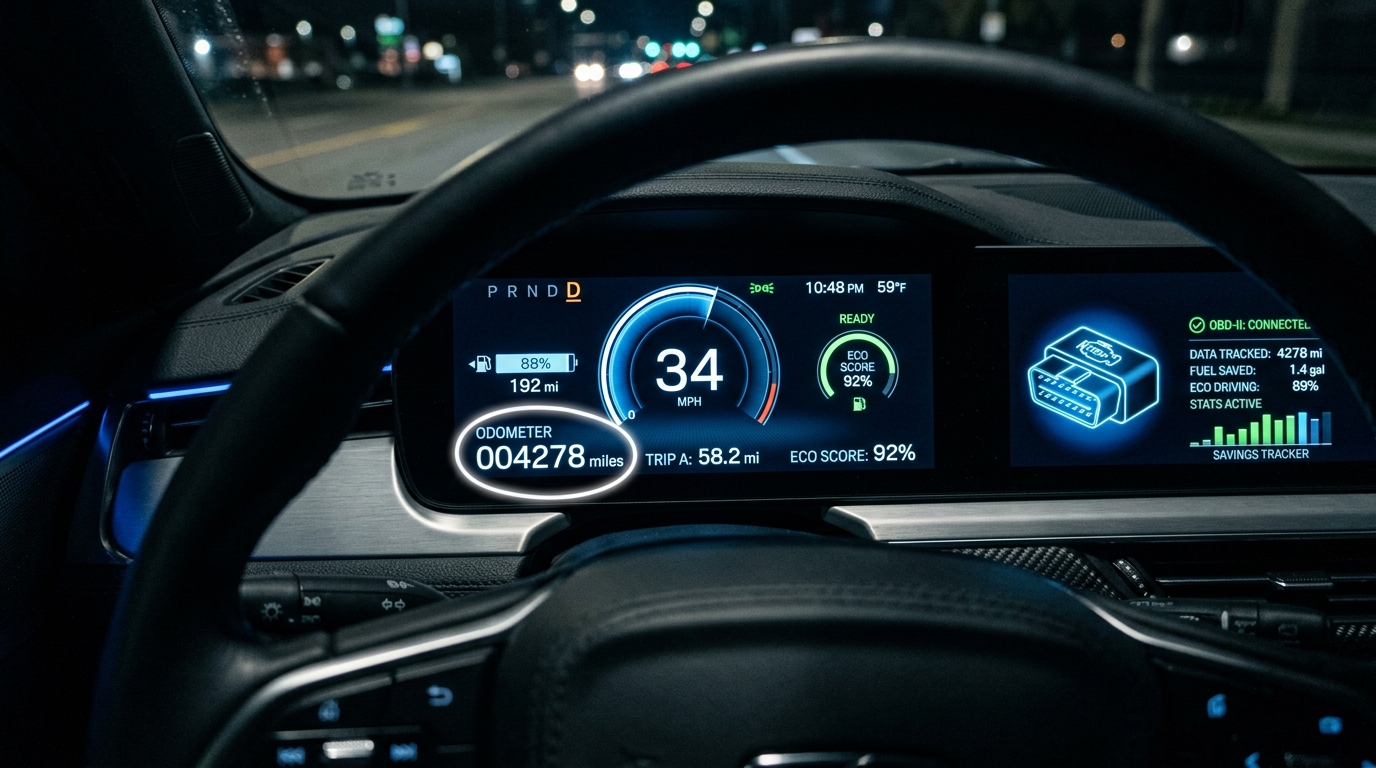
If you dislike having a GPS tracking device installed in your car's OBD-II port, carriers like Mile Auto offer "tracker-free" insurance: you simply snap a photo of your dashboard odometer once a month with your smartphone.
Compare Verified Rates in Your State
Benchmark rate filings from Progressive, State Farm, GEICO, Allstate, and Travelers with zero obligation.
Frequently Asked Questions
Q: Does pay-per-mile insurance penalize hard braking or late-night driving?
Standard pay-per-mile programs (like Metromile or Mile Auto) strictly charge based on distance, NOT driving behavior. However, hybrid programs (like Allstate Milewise Unlimited) can factor in speed and braking.
Q: What happens if I unplug the OBD-II device?
If the device is unplugged or loses communication, carriers will alert you via email or app notification. If not reconnected, the carrier defaults to an automated daily mileage charge (typically 50–100 miles/day).
Q: Does pay-per-mile offer full collision and comprehensive coverage?
Yes. Pay-per-mile policies offer the exact same coverage options as standard policies: State-mandated liability, Comprehensive, Collision, Rental Reimbursement, Roadside Assistance, and UM/UIM.
Related Authority Insurance Guides
Gap Insurance Explained: When Is It Worth It?
Learn how gap insurance covers vehicle loan depreciation deficits for $30/year.
Limits BaselineHow Much Car Insurance Do I Actually Need?
Why state minimums put your savings at risk and why 100/300/100 is baseline.
Bundling SecretsHome & Auto Bundling: Save 25% on Premiums
Compare multi-line discount tiers across State Farm, Allstate, and Progressive.