Key Takeaways at a Glance
- Algorithmic Non-Renewals: Top insurers (State Farm, Travelers, Allstate) use high-resolution aerial imagery from Nearmap and Cape Analytics to inspect roofs annually.
- False Positives: Computer vision AI frequently flags harmless tree shadows, cosmetic roof streaks, solar panel glare, or temporary tarps as structural degradation.
- The 30-Day Window: When you receive a Notice of Non-Renewal or Conditional Cancellation, state law grants a strict 30-day window to provide counter-evidence.
- Independent 4-Point Inspection: Hiring a licensed roof contractor to certify remaining useful life (typically 5+ years) is the fastest way to reverse an AI cancellation.
- 1. The New Underwriting Reality: Invisible Aerial Inspections
- 2. The Problem with AI Underwriting: High False Positive Rates
- 3. Step-by-Step Playbook: How to Contest an AI Roof Non-Renewal
- 4. Carrier Roof Age & Underwriting Appetite Breakdown
- 5. Proactive Measures to Protect Your Home Against AI Inspections
- Frequently Asked Questions
1. The New Underwriting Reality: Invisible Aerial Inspections
Over the past 24 months, tens of thousands of US homeowners have opened their mailboxes to find an unexpected Notice of Non-Renewal from their homeowners insurance carrier. The letter often includes an overhead aerial photograph of their roof, highlighting areas circled in red and claiming "unacceptable roof wear, granular loss, moss buildup, or deferred maintenance."
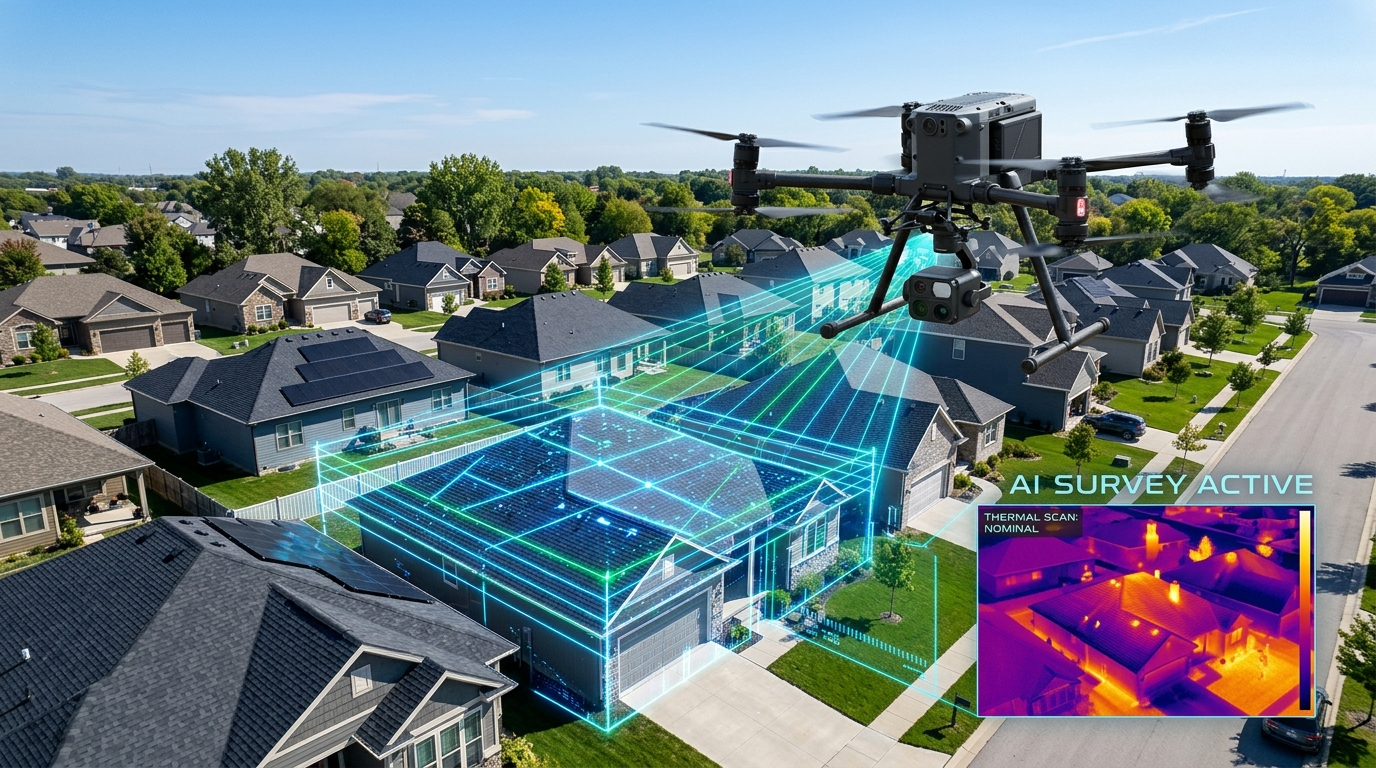
What shocks most policyholders is that no insurance inspector ever stepped foot on their driveway. Instead, property and casualty carriers have partnered with aerial imaging geospatial firms like Nearmap, Cape Analytics, and Arturo.
These companies deploy high-altitude fixed-wing planes, commercial satellites, and high-resolution surveillance drones equipped with optical zoom and thermal sensors. Computer vision artificial intelligence models automatically scan millions of residential roofs, assigning risk scores based on detected discoloration, missing granules, pool maintenance, and overhanging tree canopies.
2. The Problem with AI Underwriting: High False Positive Rates
While aerial surveillance allows insurance carriers to inspect millions of properties at negligible cost, the computer vision algorithms frequently generate costly false positives.
Common algorithmic errors include: misidentifying harmless organic black algae (Gloeocapsa magma) as degraded shingles, classifying morning tree branch shadows as structural sags, mistaking architectural dimensional shingles for curled tabs, and flagging temporary skylight covers or garden tarps as storm damage.
Furthermore, aerial camera flyovers may be 12 to 24 months out of date. Homeowners have received cancellation notices for roofs that were completely torn off and replaced with new Class 4 impact-resistant shingles months after the aerial flight took place.
3. Step-by-Step Playbook: How to Contest an AI Roof Non-Renewal
If your carrier issues a cancellation or non-renewal notice based on aerial imagery, act immediately. Do not ignore the notice, as a lapse in homeowners insurance will trigger expensive lender-placed hazard insurance and classify your home as high-risk.
Step 1: Request the Full Inspection Evidence File: Under state insurance department regulations, you have the legal right to demand the exact photographic evidence and risk report your insurer used to justify non-renewal. Request the flyover capture date.
Step 2: Hire a Licensed Roofing Contractor for a Certified Inspection: Call a licensed, insured roofing professional (not a storm-chasing sales rep). Request a formal "Roof Life Expectancy Certification" documenting that the roof has at least 5 years of functional waterproof life remaining. Have them take high-resolution date-stamped ground and roof-level photographs.
Step 3: Perform Cosmetic Remediation (Soft Washing & Trimming): If the aerial image flagged moss or algae, hire a soft-wash roof cleaning company using ARMA-approved sodium hypochlorite treatments. Trim all tree limbs back at least 6 to 10 feet from the roofline.
Step 4: Submit a Formal Underwriting Reconsideration Package: Submit the contractor certification letter, proof of tree trimming, paid soft-wash invoices, and 15+ ground photographs to your agent and carrier underwriting appeals board.
Step 5: File a State DOI Complaint If Unreasonable: If your insurer refuses to review verified ground evidence, file an expedited complaint with your State Department of Insurance (DOI) for arbitrary and capricious underwriting.
4. Carrier Roof Age & Underwriting Appetite Breakdown
Knowing which carriers accept older roofs can save you thousands if an appeal fails:
| Carrier | Strict Shingle Roof Cutoff | Aerial Inspection Frequency | ACV Roof Endorsement Rules | Flexibility on Appeals |
|---|---|---|---|---|
| State Farm | 15–20 Years | Annual / Bi-annual flyover | Switches to ACV (depreciated) at 15+ yrs | Moderate; accepts licensed roofer affidavits. |
| Allstate | 15 Years | Cape Analytics AI model | Enforces Roof Surface Extended Payment (ACV) | Strict; often requires full shingle replacement. |
| Travelers | 20 Years | High-res aerial survey | Decreasing percentage schedule | High; will maintain coverage if 5+ years certified. |
| Erie Insurance | 20–25 Years | Selective periodic review | Replacement cost available longer | Very High; regional mutual with common-sense underwriting. |
| Citizens (FL / Fair) | 15 Years (Shingle) / 25 (Tile) | Mandatory 4-Point Inspection | ACV mandated by statutory reform | Regulatory; requires official 4-point pass. |
5. Proactive Measures to Protect Your Home Against AI Inspections
To avoid being targeted in next year’s insurer flyover, conduct semi-annual roof maintenance. Keep gutters clear of debris, prune back tree limbs hanging over the chimney and roof valleys, and inspect attic decking for moisture stains. Maintaining a clean physical appearance from above is now an essential element of personal insurance risk management.
Compare Verified Rates in Your State
Benchmark rate filings from Progressive, State Farm, GEICO, Allstate, and Travelers with zero obligation.
Frequently Asked Questions
Q: Can an insurance company legally cancel you using drone or satellite photos?
Yes. State insurance laws permit carriers to use aerial photography, satellite imagery, and drone scans during underwriting to assess physical property condition, provided they provide statutory written notice (typically 30 to 45 days).
Q: What is the difference between Replacement Cost and ACV on an old roof?
Replacement Cost pays the full current cost to replace the roof with brand new materials without deducting for age. Actual Cash Value (ACV) deducts depreciation for age, meaning an insurer might only pay 30% to 50% of the cost on a 15-year-old roof.
Q: How long does a roof inspection appeal take?
Underwriting reconsideration typically takes 10 to 14 business days once you submit a licensed contractor’s roof certification and updated date-stamped photographs.
Related Authority Insurance Guides
Gap Insurance Explained: When Is It Worth It?
Learn how gap insurance covers vehicle loan depreciation deficits for $30/year.
Limits BaselineHow Much Car Insurance Do I Actually Need?
Why state minimums put your savings at risk and why 100/300/100 is baseline.
Bundling SecretsHome & Auto Bundling: Save 25% on Premiums
Compare multi-line discount tiers across State Farm, Allstate, and Progressive.